
Customer Service AI Works Best When the Boundaries Are Clear
Chatbots earn their place in customer service when their role, limits and handover to humans are clearly defined.
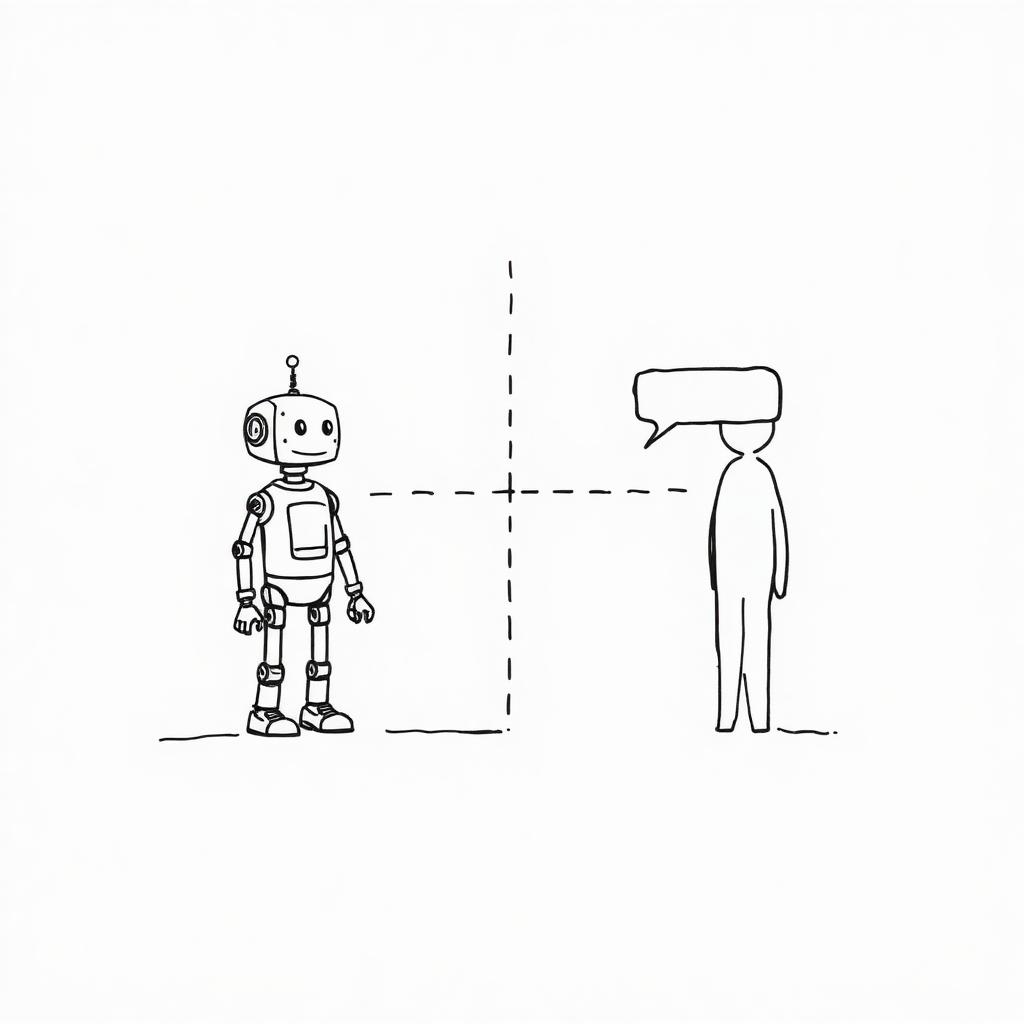
Customer service has always sat between routine work and human judgement. A large share of the job can be mapped into repeatable questions, standard answers and clear processes, while another share depends on patience, timing and the ability to understand what a customer is really asking for when the situation is messy. That tension has become more visible as chatbots move from small digital experiments into the ordinary machinery of support teams, where they now answer account questions, process simple requests and absorb volumes of contact that many organisations would struggle to manage by phone or email alone. The appeal is straightforward. Customers want help outside office hours, businesses want shorter queues, and support teams need relief from the repetitive tasks that fill so much of the day. In a banking environment, where customers may need to check details, query a card issue or complete a basic transaction, automated support can make service feel more available and less dependent on waiting. The problem begins when organisations treat the technology as a general cure for customer service rather than a capability with limits, responsibilities and maintenance requirements.
The Useful Work Is Often the Repetitive Work
A lot of customer service is made up of small, practical moments that are easy to undervalue from inside a company. Customers forget passwords, ask about payments, check delivery status, update personal details or look for confirmation that something has been completed. These contacts may be routine for the organisation, yet they still matter to the person trying to solve a problem quickly. This is where chatbots can make a genuine operational difference. The strongest examples are not built as decorative website features or polite pop-ups that sit beside the real service system. They are connected to knowledge bases, supported by internal teams and improved as customer behaviour changes. In the banking case, the organisation created a dedicated analytical intelligence unit to coordinate its AI work, develop the virtual assistant and support the ongoing improvement of the system. Human oversight remained part of the process, with teams reviewing answers, identifying gaps and refining the chatbot's knowledge over time. That detail matters because chatbot performance does not come from automation alone. It depends on the accuracy of the information behind the system, the clarity of the processes it is allowed to handle and the discipline of the people responsible for maintaining it. A chatbot that can answer thousands of customers at once is only useful when the answers are current, relevant and matched to what the customer actually needs. Otherwise, scale simply helps poor service travel faster.
Scale Only Matters When It Solves Something
The banking example shows how powerful automated service can become when the foundations are strong enough to handle demand. The virtual assistant moved from 17 million interactions in 2019 to 181 million in 2020, with further expansion after that. Customer adoption increased sharply, while problem solving improved rather than collapsed under the additional volume. That combination is important because usage alone does not prove success. Customers may use a channel because it is available, but they continue relying on it only when enough of their problems are resolved. The best use of chatbot technology is usually found in this kind of structured service environment, where the questions are common, the processes are clear and the system can learn from repeated patterns. Once the chatbot handles those enquiries well, human advisers can spend less time repeating the same basic instructions and more time dealing with complex complaints, unusual circumstances and cases where judgement is required. There is also a less obvious benefit. Automated conversations reveal what customers are repeatedly asking, where they get stuck and which issues keep being escalated. That information can help organisations improve internal processes, update knowledge libraries and identify weak points in the customer journey. Customer service then becomes a source of operational insight, rather than only a department measured by speed and cost.
Faster Answers Can Still Feel Unhelpful
The harder part of customer service automation begins once the simple questions have been removed from the queue. What remains is often more emotional, more unusual or more difficult to resolve cleanly. A customer asking about a delayed parcel may only need a tracking update, while another may be dealing with a missing item needed for an event, a failed refund or a complaint that has already been mishandled. Generative AI has made automated support sound more natural, which can be useful, but fluent wording should not be mistaken for understanding. A response can appear considerate while still missing the emotional weight of the situation. In customer service, customers look for more than clear language. They look for ownership, discretion and signs that the organisation recognises the seriousness of the issue. This is where the tensions around AI become more visible. Automated service can make a brand feel more accessible, while also making some customers feel cut off when human contact disappears from moments where it would have been reassuring. Personalisation can save time, but it can also feel intrusive when people do not understand how their data is being used. Lower handling costs may look attractive in a management report, while creating anxiety inside support teams if staff believe the technology is being introduced mainly to reduce headcount. These tensions do not make AI unsuitable for customer service. They make careless implementation unsuitable. A business can improve response times and still damage trust if customers feel trapped in a system designed to avoid giving them a person. The damage is not always dramatic, because a customer may complete the interaction and still leave with the feeling that the company has become harder to reach when the issue actually matters.
The Handover Is Where the System Proves Itself
A useful chatbot needs to know when to stop. Many poor automated experiences fail at this exact point. The customer asks the same question in several ways, the chatbot keeps offering a version of the same unsuitable answer, and the route to a human adviser is hidden behind menus or delayed until the customer has lost patience. By the time a person enters the conversation, the customer is dealing with the original issue and the irritation created by the service design. The handover between chatbot and human support should be treated as a core part of the experience, rather than an exception to be avoided. When a conversation is transferred, the adviser should receive the issue, the relevant context, the attempted answers and the point at which the automated interaction started to fail. Customers should not have to repeat everything unless verification requires it, because repetition is one of the quickest ways to make people feel that an organisation has wasted their time. Handled well, escalation gives the technology a clear role. The chatbot deals with routine contact, gathers information and identifies likely intent, while human advisers handle situations that require discretion, negotiation or emotional care. In that model, employees are not reduced to emergency backup for failed automation. Their knowledge becomes part of the service system itself, used to resolve complex issues and improve the automated layer over time. Customer service AI works best when it has a defined job, a maintained knowledge base, clear escalation rules and human ownership around it. Without those elements, automation becomes another layer of friction with better branding. With them, it can make everyday service less burdensome while allowing people to spend more time on the conversations where their judgement still makes the difference.
Sources
Andrade, I. M. D., & Tumelero, C. (2022). Increasing customer service efficiency through artificial intelligence chatbot. Revista de Gestão, 29(3), 238–251. Ferraro, C., Demsar, V., Sands, S., Restrepo, M., & Campbell, C. (2024). The paradoxes of generative AI-enabled customer service: A guide for managers. Business Horizons, 67(5), 549–559.
The Monthly Brief
Join our community to stay on top of industry insights, emerging trends and useful ideas.