Why Customers Choose to Use AI Customer Service
Adoption depends on more than availability. Customers weigh emotional trust, social influence and perceived intelligence before deciding to engage.
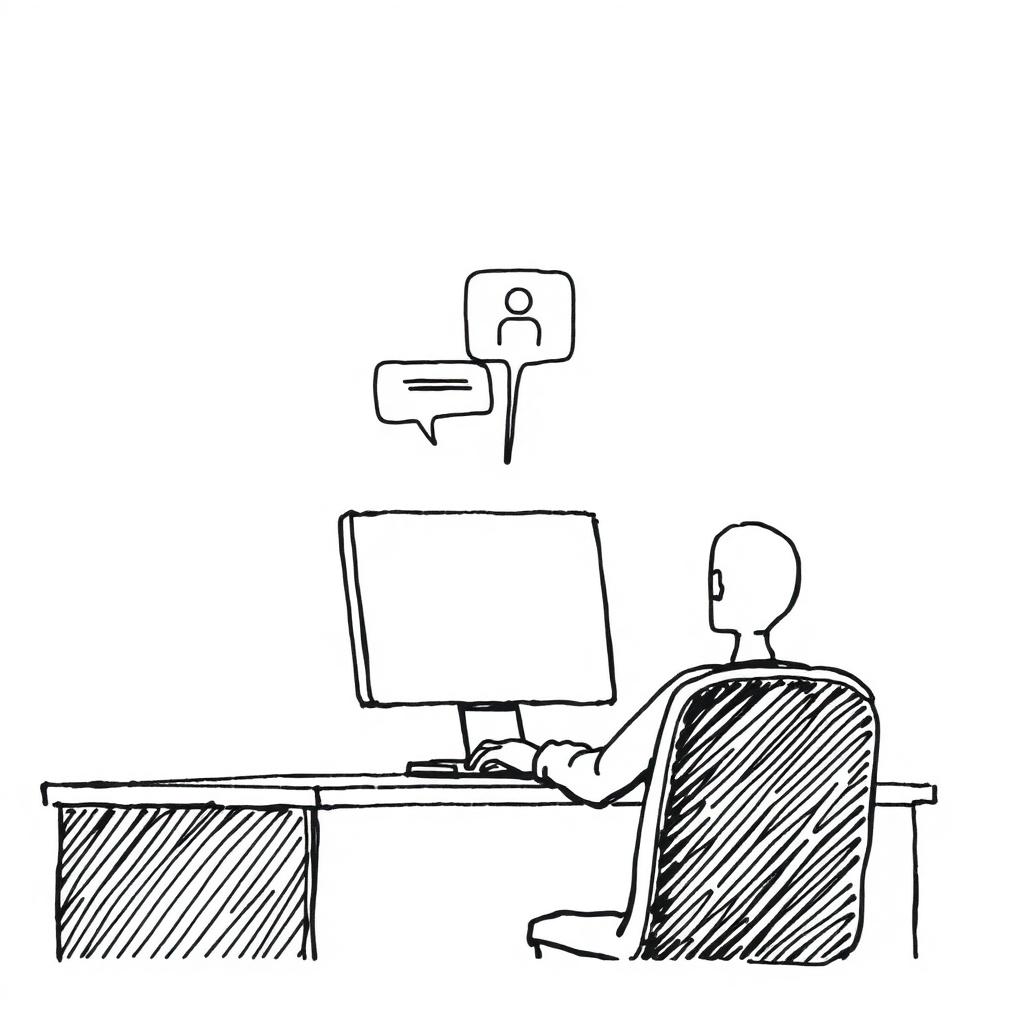
AI customer service now appears throughout the digital customer journey, responding when somebody checks an order, changes a booking or questions a charge that once required a telephone call. Its availability can create the impression that adoption will follow automatically, especially when the system removes waiting time and remains accessible outside ordinary service hours. Customers, however, enter the interaction with expectations formed by previous service encounters and the opinions of people around them, alongside their broader confidence in technology, before deciding whether the system feels dependable enough to use.
Evidence from 339 Malaysian adults who had experience with human service agents, but had not yet adopted AI customer service, presents adoption as a combination of emotional response and functional assessment. Customers consider whether the technology can complete the task, while also judging whether the interaction feels understandable and emotionally secure. Resultantly, organisations must account for how the encounter is interpreted, rather than assuming technical capability will produce willingness to engage.
Adoption Begins Before the Customer Opens the Chat
A customer does not approach an AI service system in isolation from the social world around them. Opinions shared by relatives or colleagues can shape whether automated service appears normal and trustworthy, particularly when the person has little direct experience from which to form an independent judgement. Within unfamiliar technological environments, other people’s experiences provide reassurance, allowing the customer to borrow confidence from those whose opinions they already value.
Social influence was closely connected with emotional trust, suggesting that acceptance can develop before a customer begins speaking to a chatbot. Positive experiences circulating through a social group make AI service seem less experimental, while warnings about failed interactions can create suspicion that one brand encounter may struggle to reverse. A recommendation from somebody familiar carries an emotional credibility that promotional messaging rarely reproduces.
Every automated interaction therefore contributes to the wider conditions surrounding adoption. A useful exchange may later reassure another potential user, whereas an unresolved enquiry can travel beyond the person who encountered it. Transparency supports this process when organisations explain what the service can handle and provide an accessible human route once its capabilities have been exceeded.
Human-Like Design Can Create Familiarity
Anthropomorphism, where human characteristics are attributed to a non-human system, also contributed to emotional trust. Customers responded more positively when AI customer service appeared capable of natural interaction and seemed to understand the person speaking to it, reflecting how service encounters remain subject to familiar social expectations even when no human agent is present.
Human-like design becomes useful when it reduces the distance of the interaction, allowing customers to express themselves without translating an ordinary enquiry into language that a machine might recognise. A conversational response can make automated support feel more accessible, especially for somebody who is uncertain about using it and needs some indication that their request has been interpreted correctly.
This emotional effect creates responsibility because a warm tone or human name can encourage greater trust, yet that trust becomes fragile when apparent understanding is contradicted by irrelevant answers or repetitive loops. Human-like presentation raises expectations as the customer begins to anticipate the responsiveness associated with interpersonal service. Organisations should therefore support anthropomorphic features with accurate answers and sensible escalation, rather than applying personality to a system unable to resolve the enquiries directed towards it.
Customers Recognise Intelligence Through Conversation
Perceived intelligence had the strongest relationship with task-technology fit, indicating that customers judge the suitability of AI service largely through what the system appears able to understand and accomplish. Customers look for evidence that it can interpret a request, retain context, locate information and produce an answer that moves the issue towards resolution. A technically advanced model offers little visible value when the customer must repeatedly explain the problem or abandon the interaction to search elsewhere.
Communicative competence also influenced whether the technology appeared appropriate for customer service. Speed has limited value when a response lacks relevance, while an accurate answer delivered through rigid language can still make the process unnecessarily difficult. Customers assess competence across the developing conversation, noticing whether the system remembers what has already been said and adapts when its first interpretation is incorrect. Language is the surface through which the customer encounters the underlying technology, meaning conversation design and operational performance cannot be separated.
Accessibility and real-time service further supported perceptions of fit, although their influence was smaller than perceived intelligence. Availability creates the opportunity for interaction; intelligence determines whether that opportunity becomes useful. Improving comprehension and response quality may therefore offer more value than presenting round-the-clock access as sufficient evidence of service improvement.
A Suitable Tool Does Not Automatically Become an Adopted One
One of the more revealing outcomes concerned the difference between suitability and adoption. Task-technology fit did not have a significant direct relationship with customers’ intentions to adopt AI customer service, even though communicative competence and perceived intelligence contributed to the perception that the system was suitable for the work. The broader characteristics of the technology supported this assessment as well, meaning a customer may recognise that an automated service can complete an enquiry and remain unwilling to choose it.
Existing habits influence channel choice, especially when customers have spent years contacting human agents and understand how those conversations are expected to proceed. Some associate automation with earlier chatbots that trapped them inside narrow menus, while others dislike the effort involved in learning a new service route even where its practical advantages are visible. Emotional trust had a direct connection with adoption, suggesting that feeling secure when relying on the system can carry greater weight than an abstract judgement that its functions correspond with the task.
Task characteristics did not significantly improve perceptions of fit, which complicates the assumption that customers simply match a channel to the complexity of their enquiry. People who have not adopted AI customer service may possess limited knowledge of which requests it can manage, while organisations often fail to communicate the boundaries of automated support clearly enough for an informed decision. A visible division between suitable automated tasks and enquiries requiring human judgement would reduce this uncertainty, particularly when escalation occurs without forcing the customer to begin again.
Readiness Changes the Meaning of Technical Fit
AI readiness altered the relationship between task-technology fit and adoption, showing that customers interpret the same functional advantages differently depending on their preparedness to engage with AI. People who feel confident exploring technology are better positioned to recognise how an automated service could make a task easier, whereas those who feel discomfort or insecurity may experience the same system as an additional obstacle. Functional quality is filtered through the customer’s existing orientation towards technology.
Readiness should not be treated as a fixed characteristic that leaves organisations powerless to influence adoption. Clear onboarding and low-risk opportunities to use the service can make an unfamiliar system easier to approach, while continued human support prevents experimentation from feeling irreversible. Initial trust, by comparison, did not significantly change the relationships between emotional trust, fit and adoption, implying that a favourable first impression cannot carry the service indefinitely. Confidence is constructed through the continuing quality of the interaction and the customer’s ability to obtain a useful outcome.
Ultimately, AI customer service adoption develops where functional capability becomes emotionally credible. Customers need to recognise that the system can understand their enquiry, although recognition alone may not produce use when the interaction feels unfamiliar or insecure. Social experience and personal readiness shape the meaning attached to technical performance, leaving organisations with a wider task than installing an intelligent interface. Adoption grows through repeated evidence that the system can be relied upon and that customers retain a workable route forward when automation reaches its boundary.
Sources
Vafaei-Zadeh, A., Nikbin, D., Wong, S. L., & Hanifah, H. (2025). Investigating factors influencing AI customer service adoption: An integrated model of stimulus–organism–response (SOR) and task-technology fit (TTF) theory. Asia Pacific Journal of Marketing and Logistics, 37(6), 1465–1502. https://doi.org/10.1108/APJML-05-2024-0570
The Monthly Brief
Join our community to stay on top of industry insights, emerging trends and useful ideas.