Designing the AI-to-Human Handoff
The escalation moment is where automation either earns trust or burns it. A field guide to handoffs that customers actually thank you for.
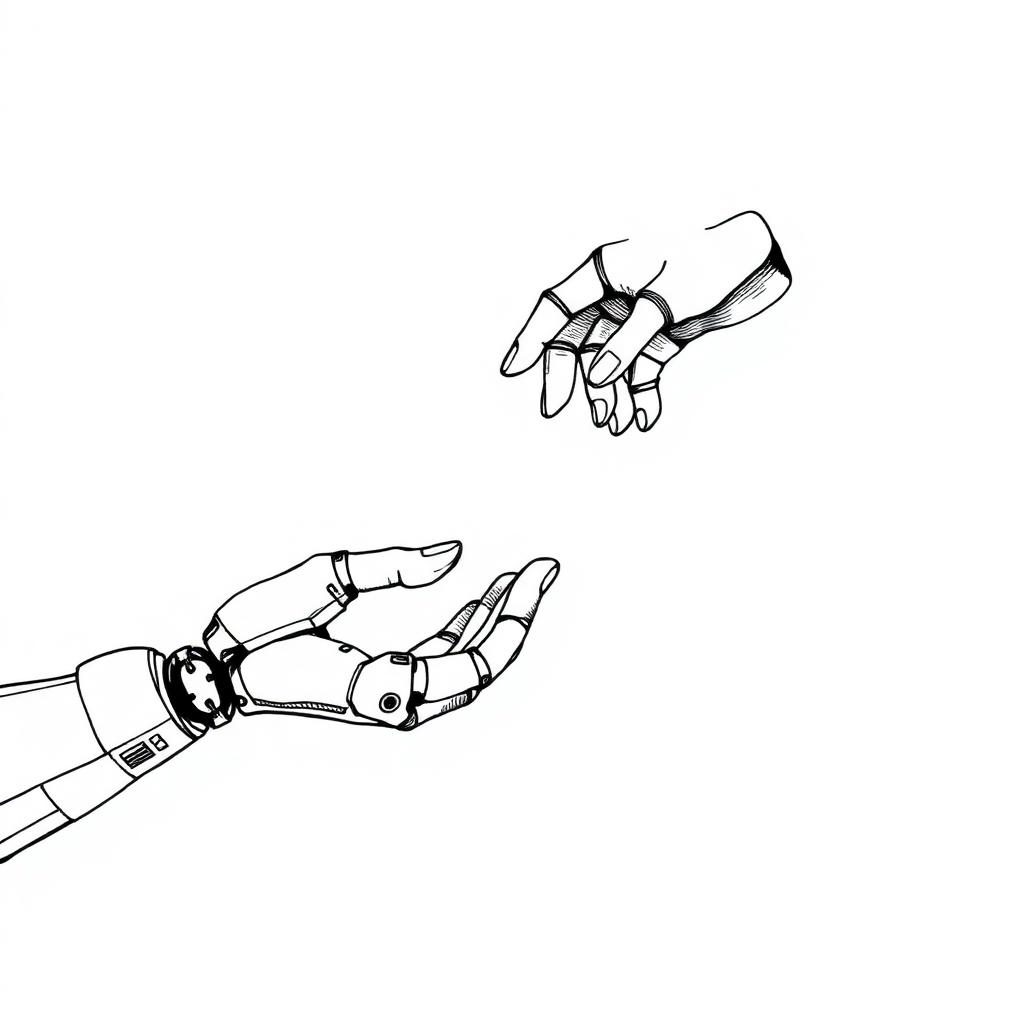
Every AI-powered support experience has a seam. It is the moment the chatbot says 'let me get someone who can help' - and it is the single most important interaction in your stack. Get it right and customers feel cared for. Get it wrong and you have just added a step to their frustration. For all the engineering effort that goes into intent classification, retrieval, and tone, the handoff is where customers actually decide whether your AI is helping them or wasting their time. Most teams treat the handoff as plumbing. It is wired up once, buried inside a routing rule, and revisited only when something breaks. That is a mistake. The handoff is a product surface in its own right, with its own metrics, its own failure modes, and its own opportunities to delight. Treat it that way and the rest of your AI strategy gets easier.
The anatomy of a good handoff
The best handoffs share three properties. They are timely: the AI knows when it is stuck and escalates before the customer asks. They are warm: the human inherits the conversation with a one-line summary and the customer's actual goal, not a raw transcript. And they are seamless: the customer never has to repeat themselves, re-verify their identity, or re-explain the problem to a second system. Underneath those three properties sit a handful of concrete design decisions. What signals trigger an escalation. What context travels with the conversation. Which agent or queue receives it. What the customer sees during the transition. Each of those decisions is worth a design review of its own.
Knowing when to escalate
Timeliness is the hardest part. Escalate too early and you undermine the value of the AI; escalate too late and you have trained the customer to distrust it. Good systems combine multiple signals: low model confidence, repeated rephrasing by the customer, sentiment dropping across turns, and explicit cues like the words 'agent' or 'human'. Any one of these alone is noisy. Together they are a reliable trigger. A useful rule of thumb: if the customer has had to rephrase the same question twice, the AI has already lost. Escalate on the second rephrase, not the fifth.
Carrying context across the seam
Warmth is mostly about context. When a human picks up the conversation, they should see a short, structured brief: who the customer is, what they are trying to accomplish, what the AI has already tried, and what it thinks the blocker is. A two-hundred-line transcript is not a brief. A three-line summary, plus the transcript on demand, is. The most underrated artifact in this whole flow is the AI's own attempt at a diagnosis. Even when it is wrong, it gives the agent a hypothesis to confirm or reject in seconds, instead of starting from zero.
Common failure modes
The worst handoffs do the opposite of all of this. They escalate too late, after the customer has typed 'agent' five times. They drop context, routing the conversation into a fresh queue with a fresh wait time and a fresh round of identity verification. They hand off to the wrong skill group, so the customer is bounced a second time. They surface the AI's uncertainty as a cold 'I did not understand that' instead of a graceful 'let me get someone who can help with this specific thing'. Each of these is fixable, but only if you can see it. Most teams cannot, because their analytics treat the AI and the human channels as separate products with separate dashboards. The seam is exactly where their visibility ends.
Measuring the seam
Instrument the handoff as its own funnel. Track the rate at which conversations cross it, the time the customer spends waiting on either side, the share of escalations that the agent resolves without asking a clarifying question, and the customer-effort score for conversations that touched both an AI and a human, compared with conversations that touched only one. That last metric is the one that matters. If mixed conversations score worse than human-only conversations, your AI is adding friction, not removing it - regardless of how good its deflection rate looks in isolation. If they score better, you have a real compounding advantage: the AI is doing the easy work and setting the human up to do the hard work faster.
Designing for the handoff from day one
The teams that get this right do not bolt the handoff on at the end. They design for it from the first prototype. They decide what a good escalation message looks like before they decide which model to use. They write the agent-facing brief template before they write a single prompt. They run usability tests across the seam, not just on either side of it. Done well, the handoff stops being a fallback and becomes a feature. Customers notice when a system gracefully admits its limits and gets them to the right person quickly, with all of their context intact. That moment of competence is worth more to your brand than any number of self-serve resolutions, because it is the moment the customer learns they can trust the whole experience - AI and human together - to actually take care of them.
The Monthly Brief
Join our community to stay on top of industry insights, emerging trends and useful ideas.