When AI Sounds Human: The Useful and Risky Sides of Anthropomorphism in Customer Service
The strange art of making machines feel approachable
Customer service teams are spending more time deciding how human their AI should feel. The question sounds simple at first. Should the bot have a name? Should it use warm language? Should it apologise? Should it sound like a person, or should it clearly behave like a tool?
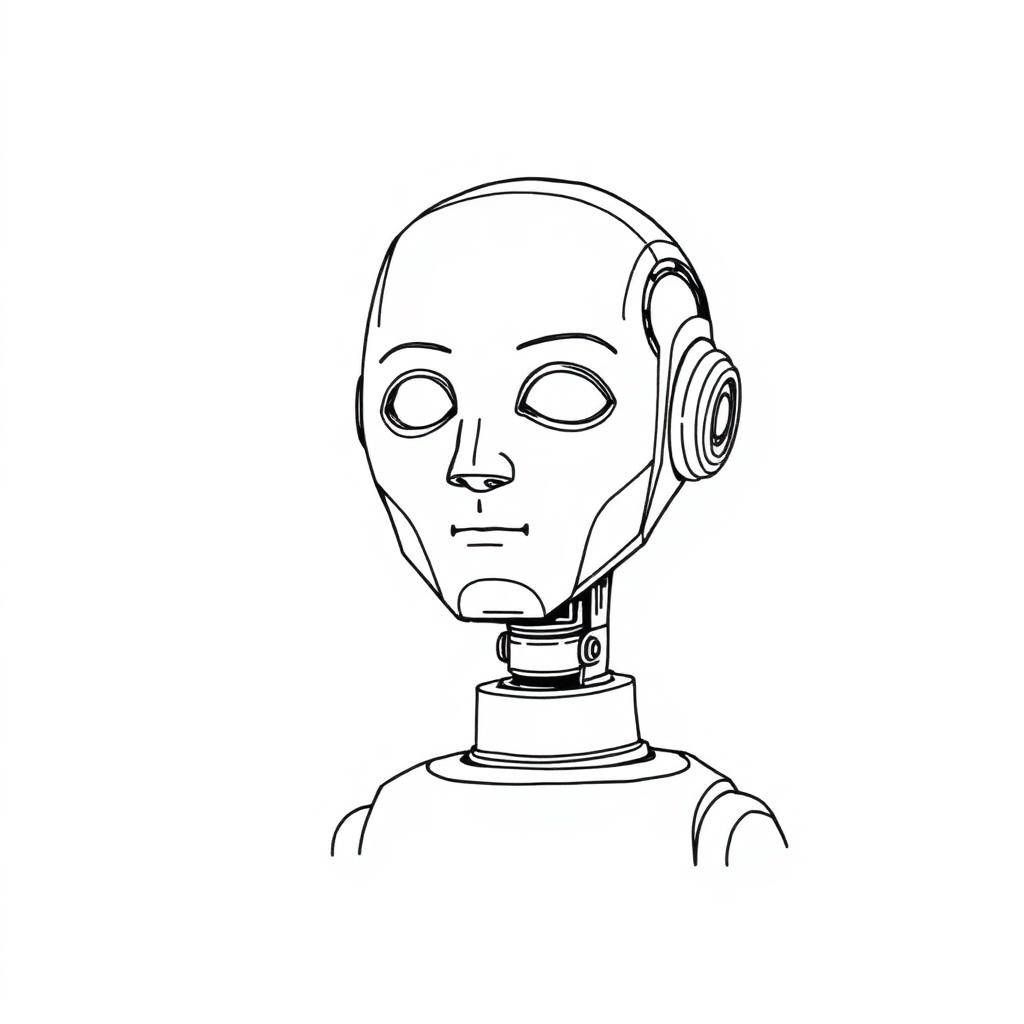
Those choices sit under a broader design concept called anthropomorphism. In plain language, it means giving non-human systems human-like features. In customer service, that might show up through a friendly voice, conversational phrasing, a human avatar, emotional cues, humour, facial expressions, or even small signals like “I’m happy to help.”
The temptation is obvious. Service is a human field. Customers often want to feel heard, understood and guided. A machine that feels warmer may seem easier to approach than a cold transaction screen. For companies rolling out AI agents, anthropomorphism can feel like a way to soften the handover from human support to automated support.
Yet human-like design is not automatically better. It can be useful, but the effect depends heavily on context. Customers do not respond to human-like AI in one consistent way. They read the situation, make judgments about the AI’s role, and react according to how much control they feel they have.
Why control changes everything
Anthropomorphism can increase or reduce willingness to use an AI service agent, depending on the customer’s sense of control. When customers feel they have more control over the service process, they are often more open to highly human-like AI agents. In that setting, human-like design can raise performance expectations. Customers may assume that a more human-like agent will be more capable, more responsive, and better able to complete the service task.
That finding makes sense in many customer service situations. When a customer is asking a straightforward product question, booking something, checking an order, or choosing between options, a human-like AI agent can make the interaction feel easier. The customer remains in charge. The AI is there to help, not to decide. The human-like layer gives the customer a clearer sense of how to interact with the system.
When friendly starts to feel uncomfortable
The problem begins when the customer does not feel in control. In low-control contexts, more human-like AI agents can create a stronger sense of threat. Customers in those situations may prefer less anthropomorphic agents. The issue is not simply whether the AI looks or sounds friendly. It is how the customer interprets the AI’s position in the service encounter.
Low-control service moments are common. A customer may be dealing with a complaint, a denied refund, a failed delivery, a billing issue, an account restriction, or a policy they do not understand. They may already feel powerless. Adding a highly human-like AI agent into that moment can make the experience feel more uncomfortable. The customer may feel managed by a system pretending to be personal, rather than supported by a service channel with clear authority and escalation.
That is one of the more important lessons for customer experience teams. Anthropomorphism should be judged against the emotional state of the customer and the power balance in the interaction. A friendly bot at the wrong moment can feel hollow. A human-like apology from a system that cannot fix the problem can irritate people more than a simple, direct explanation.
Some service moments do not need a personality
The effect of anthropomorphism is strongest in social service scenarios. In non-social situations, the human-like design matters less. When customers treat the AI as a utility, they focus more on the task. The AI does not need to feel human. It needs to work.
This matters for support design. A password reset tool does not need a personality. A delivery tracker does not need to sound emotionally aware. A billing explanation might need clarity before warmth. In task-heavy moments, human-like touches can become decorative, and customers may barely notice them unless they get in the way.
The upside: customers may engage more when AI feels alive
There is also a more positive side to anthropomorphism. Human-like AI can increase customers’ willingness to co-create value with service-oriented AI. That means the customer is not just receiving a service. They are participating in the experience, interacting with the AI, and helping shape the outcome.
Human-like design can help customers see the AI as cuter, more capable, and more novel. Those perceptions can encourage customers to interact with the system more actively.
There is a useful distinction here. In a service experience where customers are invited to explore, participate, customise, or collaborate, anthropomorphism can make the AI feel more approachable. A hotel service robot, for example, may benefit from appearing friendly or distinctive because the customer is engaging with it as part of the experience. The customer is not only trying to resolve a problem. They are forming an impression of the service environment.
Capability matters more than charm
Perceived capability is especially important. Customers are more likely to work with an AI service agent when they believe it can actually help them. Anthropomorphism can lift that perception when it signals professionalism, competence or service fluency. A human-like tone can help customers understand what the AI can do, provided the system can back it up.
Cuteness is more delicate. Perceived cuteness can encourage value co-creation, but in customer service it needs to be used with restraint. A cute AI assistant may work in hospitality, retail discovery, onboarding, or light-touch guidance. It may not work in a complaint queue or a high-stakes account issue. Customers rarely want charm when they are trying to recover money, challenge a decision, or get a serious problem fixed.
Novelty also has limits. A human-like AI agent can attract interest because it feels different from standard service technology. That can encourage customers to try it. Over time, novelty fades. Once customers have seen enough AI agents, the design has to earn its place through usefulness. A novel interface that cannot solve problems will quickly become another obstacle.
The design lever support teams should treat carefully
Taken together, these ideas point to a more mature way of thinking about AI service design. Anthropomorphism is not a universal upgrade. It is a design lever. It can increase engagement when the customer feels in control, when the service moment is social, and when the AI’s human-like features help customers understand, trust, or enjoy the interaction. It can backfire when customers feel powerless, when the service issue is serious, or when the system performs below the expectations created by its human-like design.
For customer service leaders, the practical question is not “how human should our AI be?” A better question is “what should the customer feel in this moment?” If the answer is confident, guided and in control, a warmer AI agent may help. If the answer is protected, respected and quickly escalated, a simpler machine-like interface may be safer.
Human-like AI raises the bar
There is also a trust issue. Human-like AI raises expectations. When a bot uses empathy language, customers may assume it understands their situation. When it has a name and a personality, customers may expect continuity. When it sounds highly capable, customers may expect judgment. If the system cannot meet those expectations, the human-like layer becomes a liability.
Good AI service design should make the limits obvious. Customers should know when they are speaking to AI. They should know what the AI can do. They should have a clear path to a human when the issue moves beyond the system’s authority. Anthropomorphism should never be used to hide automation or make a weak service process feel more caring than it is.
Warmth is useful only when it helps the customer
The strongest use of anthropomorphism is functional. It can make instructions easier to follow. It can make a new interface feel less intimidating. It can encourage customers to engage with a service experience when participation is useful. It can also make an AI agent feel less abrupt in routine interactions.
The weakest use is cosmetic. Giving a bot a human name will not fix poor routing. A warm tone will not make an inaccurate answer acceptable. A smiling avatar will not repair a broken escalation process. Customers are quick to notice the gap between the personality of a system and the actual help it provides.
The better principle is simple: make AI human-like only where the human-like qualities serve the customer’s goal. In customer service, the best AI agent may be friendly in one moment, plain in another, and almost invisible elsewhere. The right design depends on the customer’s task, their level of control, and the seriousness of the problem.
Anthropomorphism is useful when it helps the customer feel capable and supported. It is risky when it asks the customer to accept personality in place of resolution.
Sources
Tian, M., Yan, J., & Li, X. (2025). Anthropomorphism of service-oriented AI and customers’ propensity for value co-creation. Marketing Intelligence & Planning, 43(1), 50–72.
Yang, Y., Liu, Y., Lv, X., Ai, J., & Li, Y. (2022). Anthropomorphism and customers’ willingness to use artificial intelligence service agents. Journal of Hospitality Marketing & Management, 31(1), 1–23.
The Monthly Brief
Join our community to stay on top of industry insights, emerging trends and useful ideas.